
Yelena Dobric
Yelena Dobric
User Journeys, Process Diagram and a User Flow
Four items in this section:
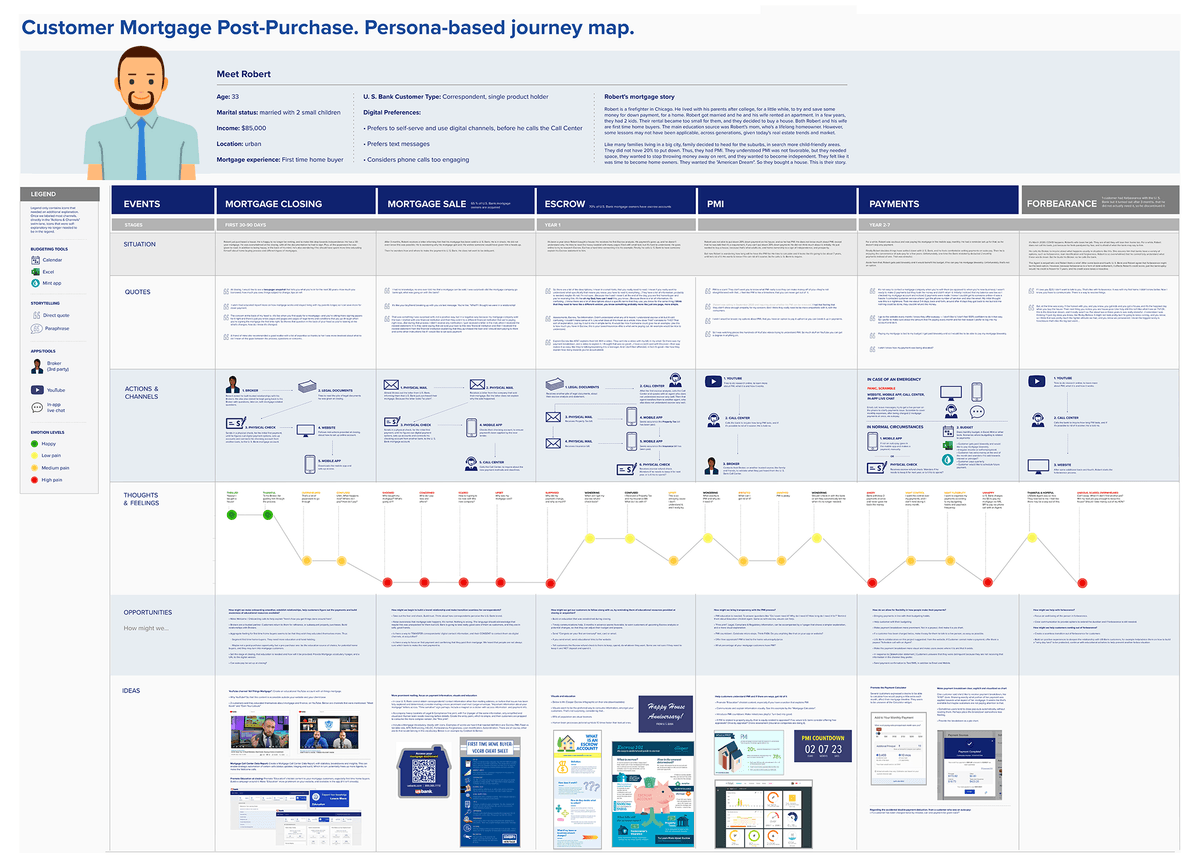
#1 Two user journeys for the mortgage division of the U.S. Bank. I built in Mural.
#2 Two onboarding user journeys for BNY Pershing Wealth Management; client and API, built in Adobe Illustrator.
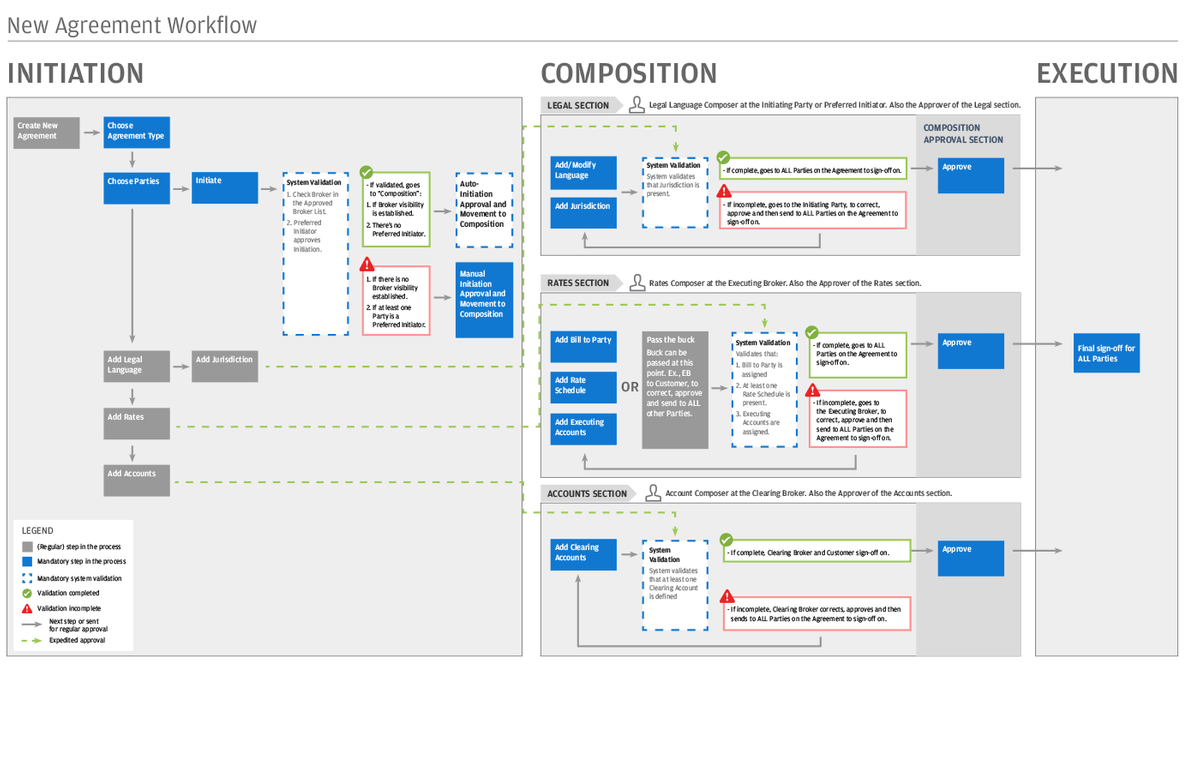
#3 One user flow for a derivatives agreements SaaS app, I designed for a futures start-up, built using Adobe.
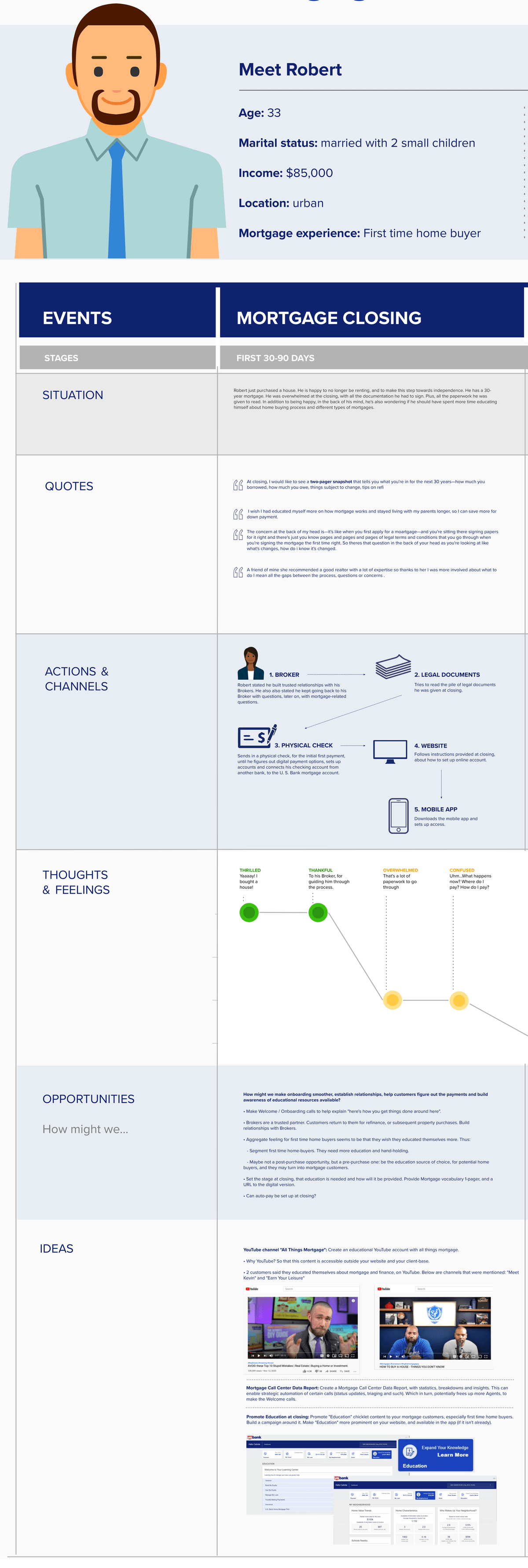
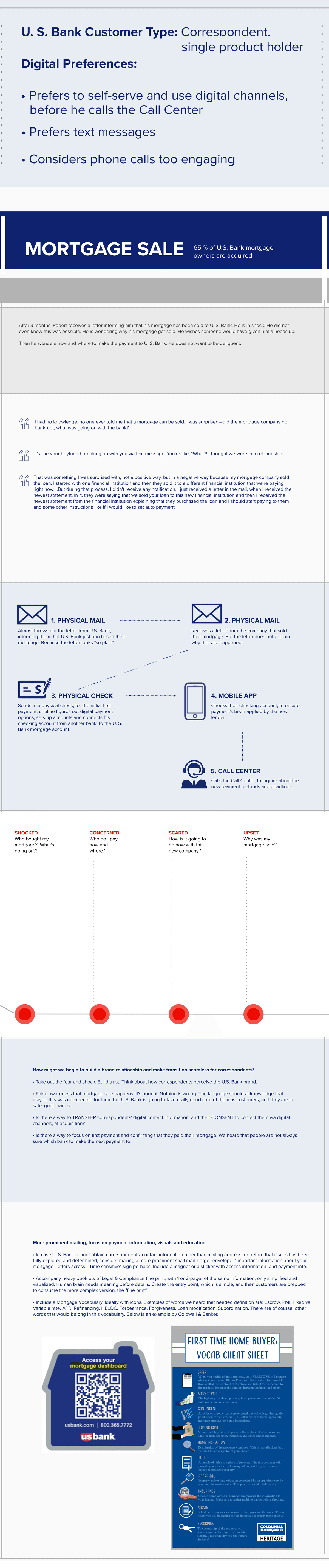
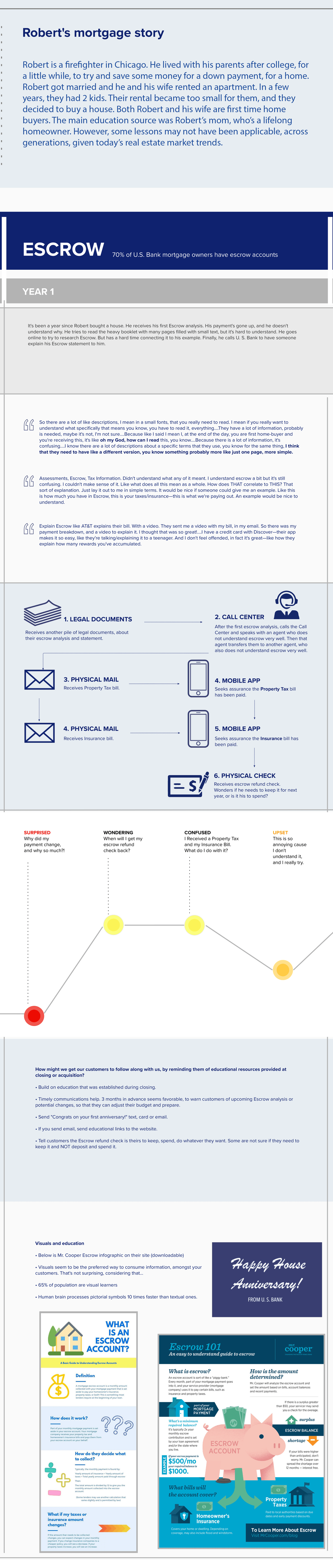
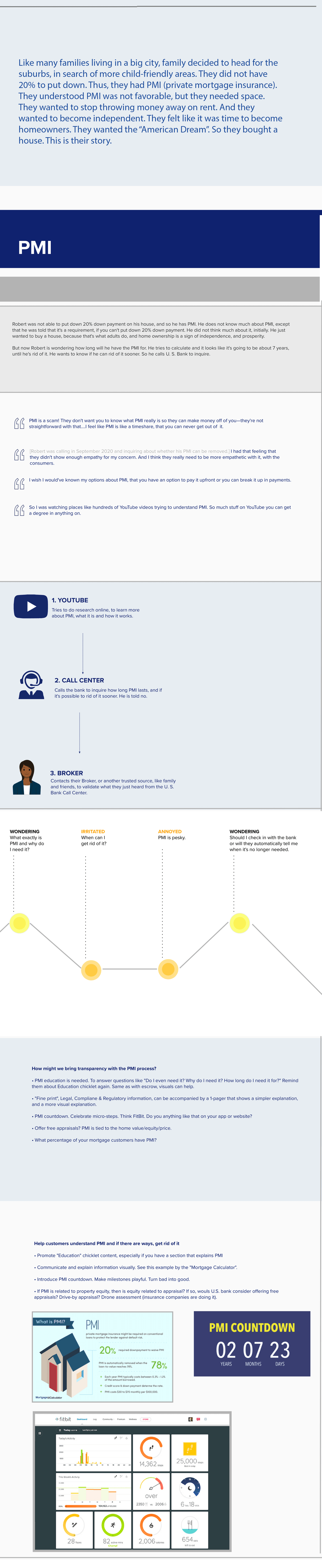
Journey Map for US Bank mortgage division
Situation:
Client has 1.7 million mortgage customers. 70% of those are single product customers. Meaning, they only have mortgage with our client. Client wanted to convert some of these single product customers, into multi-product customers. In other words, have them:● Open checking or savings accounts
● Open credit cards
● Open brokerage accounts
● Apply for HELOC (home equity line of credit)
● If they want to buy another house or a new house the bank would prefer they do it with them
In order to cross-sell, client wanted to:
● Learn more about their customers. What they want, what they need, what channels they prefer, what frequency of communication and product offering.
● Improve customer satisfaction levels. It is unlikely that customers will buy extra products from one company, if they are unhappy with their existing product from that company. This is especially for acquired mortgage customers (whose mortgage was purchased by our client), who tended to have bumpier on-boarding and overall experience with our client.
Task:
Understand and document the end-to-end experience of the Mortgage Servicing Journey for customers. Identify opportunity areas for improvement across channels and journey touch-points.Team:
3 user Researchers, Project Manager and me.Action:
This project was for me:● 20% user research
● 20 analysis & synthesis
● 20% strategy
● 40% building the user journeys in Mural
We interviewed 17 customers. Analyzed and synthesized content. And created the Findings Deck, which was a PowerPoint. And 2 Customer Journey Maps.
I built the journey maps. I extracted content, to weave a story together, in a way that:
● Feels natural and logical
● Highlights pain points
● Prioritizes pain points
Result:
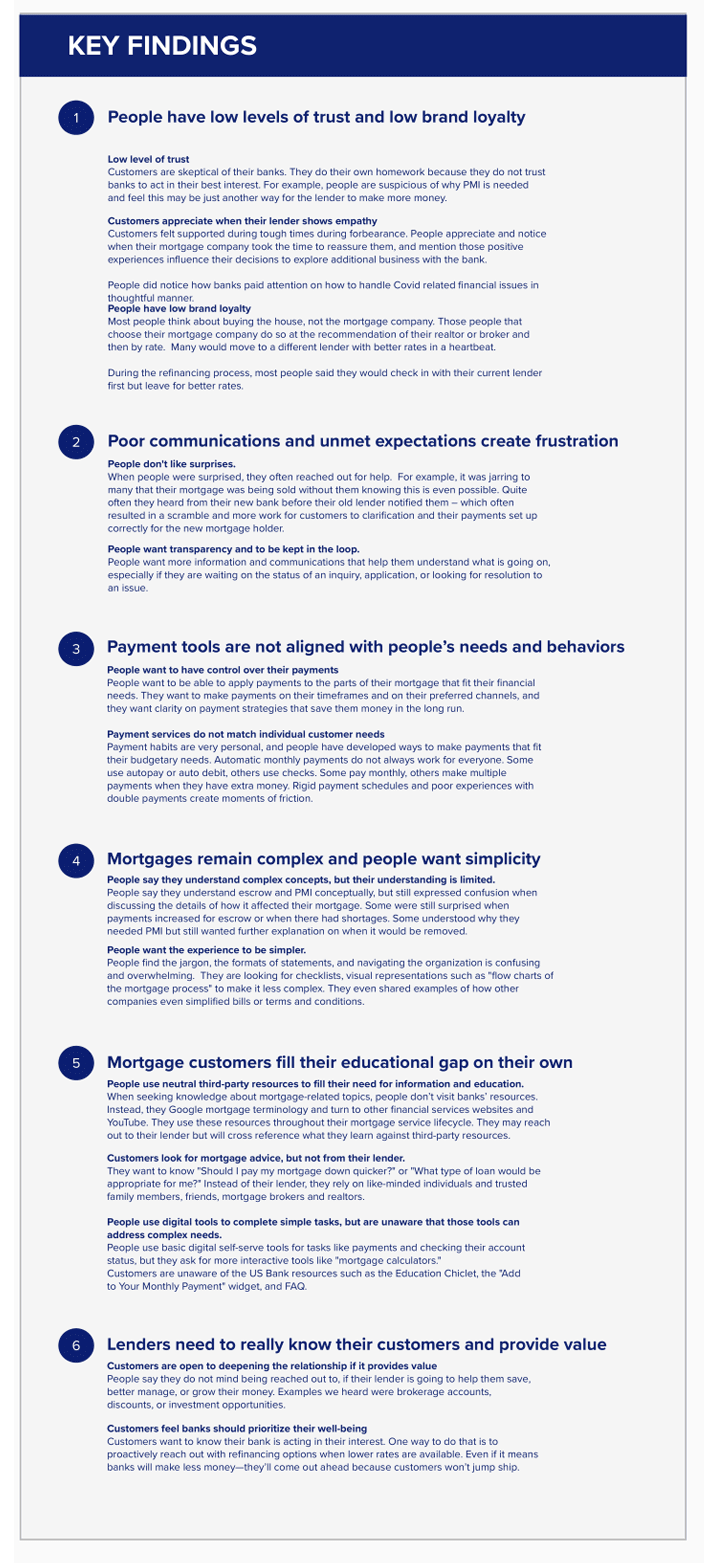
We found that first time home buyers experience a lot of shock and stress, during the first several years of the home ownership. Especially with complex issues like Mortgage Sale, Escrow, and PMI (private mortgage insurance).6 key findings:
1. People have low levels of trust and low brand loyalty
2. Poor communications and unmet expectations create frustration
3. Payment tools are not aligned with people’s needs and behaviors
4. Mortgages remain complex and people want simplicity
5. Mortgage customers fill their educational gap on their own
6. Lenders need to really know their customers and provide value
Opportunities:
1. Be a better + proactive communicator
2. Transform into a trusted financial partner
3. Become a go-to source for mortgage education
4. Build out data infrastructure to help orient offerings to customer needs
5. Simplify + clarify mortgage service processes
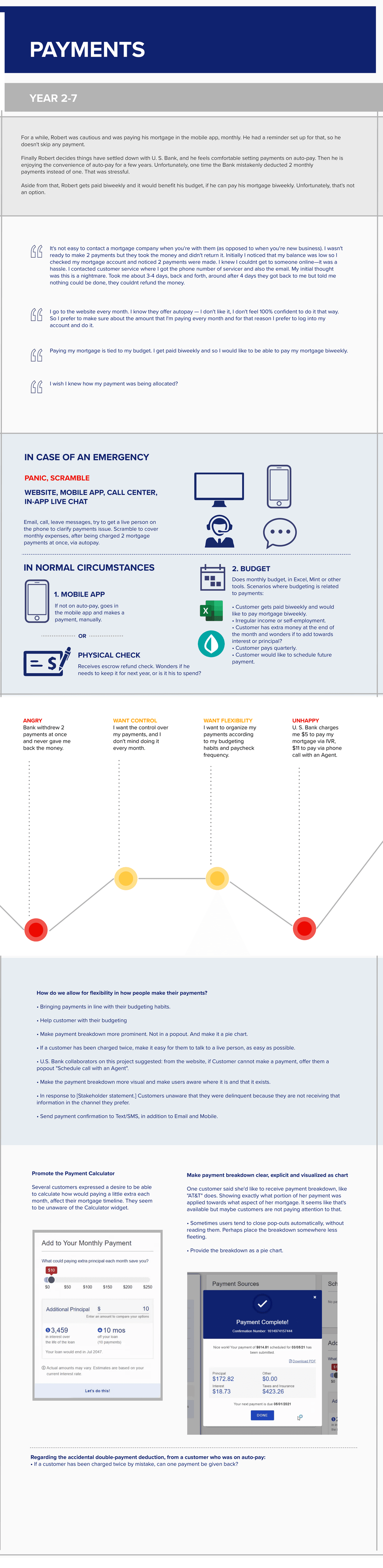
First Journey is Persona-based. It enables stakeholders to identify with the user, and follow along. Persona-based journey is an entry point, into a comprehensive, master, process-based journey.
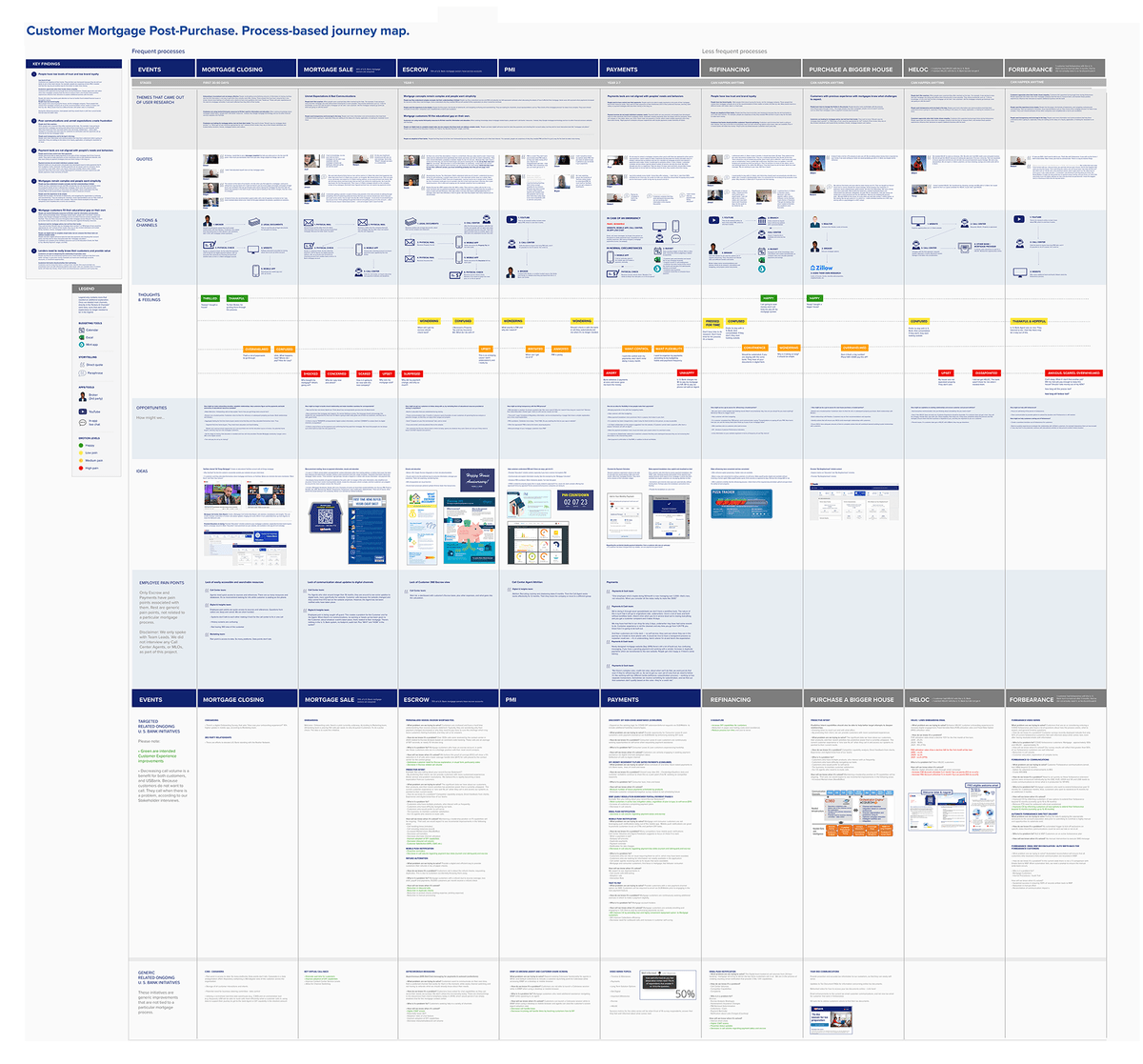
Second is Process-based; it's more comprehensive, and it includes Employee Pain Points, as well as Current Initiatives that the Bank is taking, to mitigate some of the issues they were already familiar with.
Qualitative and quantitative result: Key finding was that initiatives in the bank were prioritized only by ROI (return on investment). Not by LOE (Level of Effort) or CSat (Customer Satisfaction). CSat was a side-effect of some ROI-based initiatives.
If you look at the comprehensive, process-based journey, you will see current significant efforts focused around:
● Escrow
● Payments
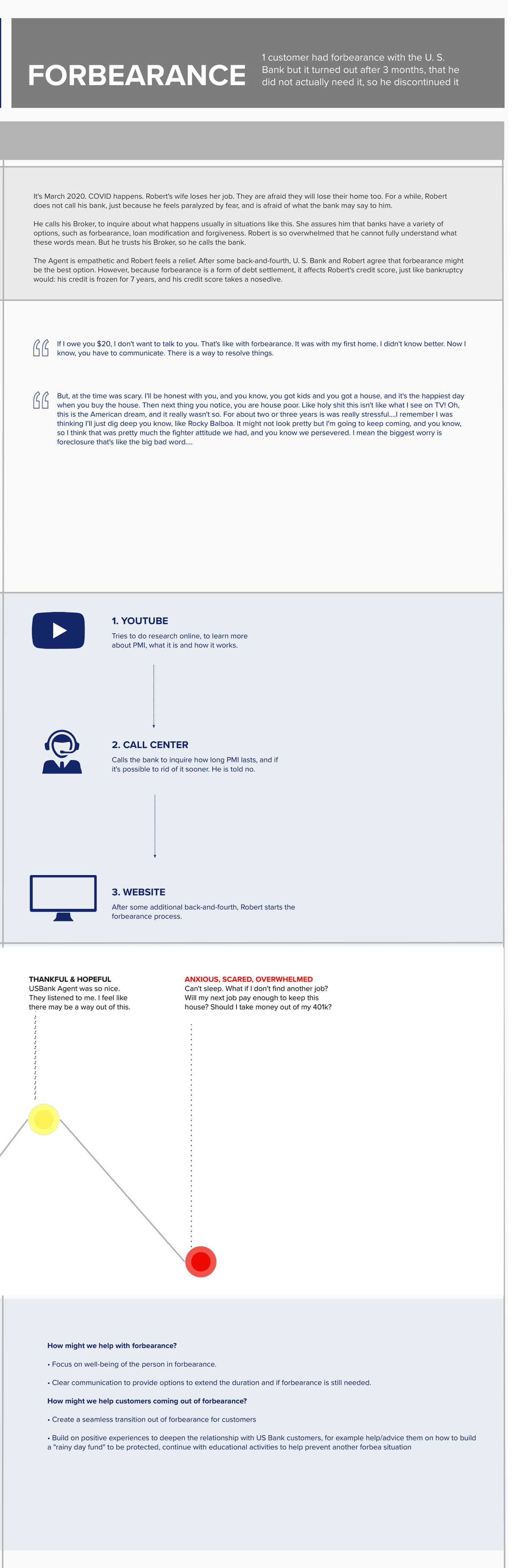
● Forbearance
And zero efforts on:
● Acquired customer on-boarding (biggest customer pain point)
● PMI (Private Mortgage Insurance)
● Refinancing
Actionable insight was that customers were interested in:
● Investment options (brokerage accounts, robo-advisors)
● Financial education
● Mortgage education (better understand escrow and PMI)
● Money management education (forced COVID savings, put it towards mortgage or invest it? if towards mortgage, should it be towards principal or interest?)
● Refinancing with USBank (rates are low)
Surfacing this information was valuable to our client, as it enabled them to do some introspection and prioritization.
User Journey for BNY Mellon Private Wealth Management, client onboarding
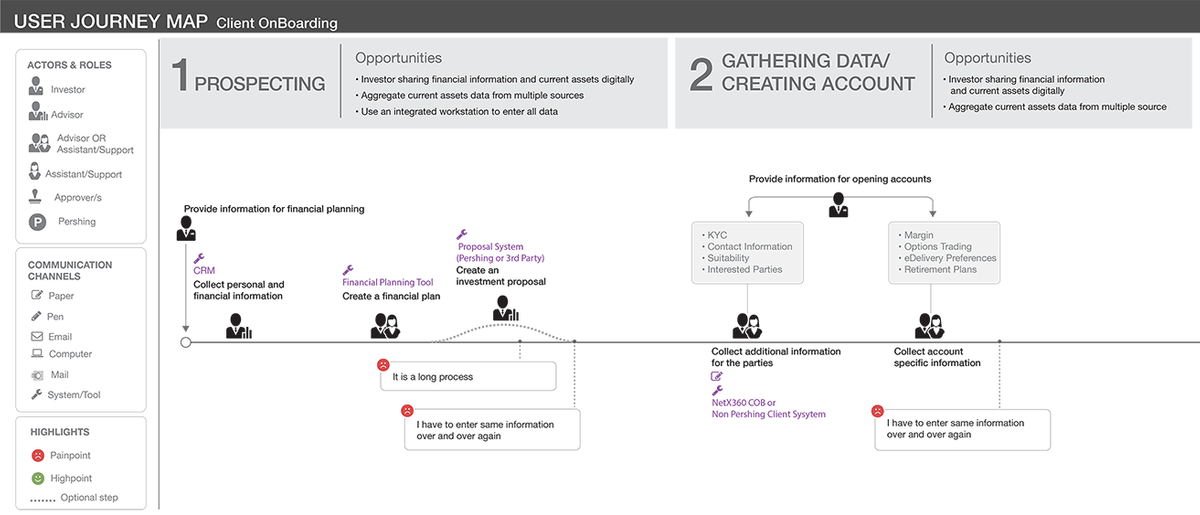
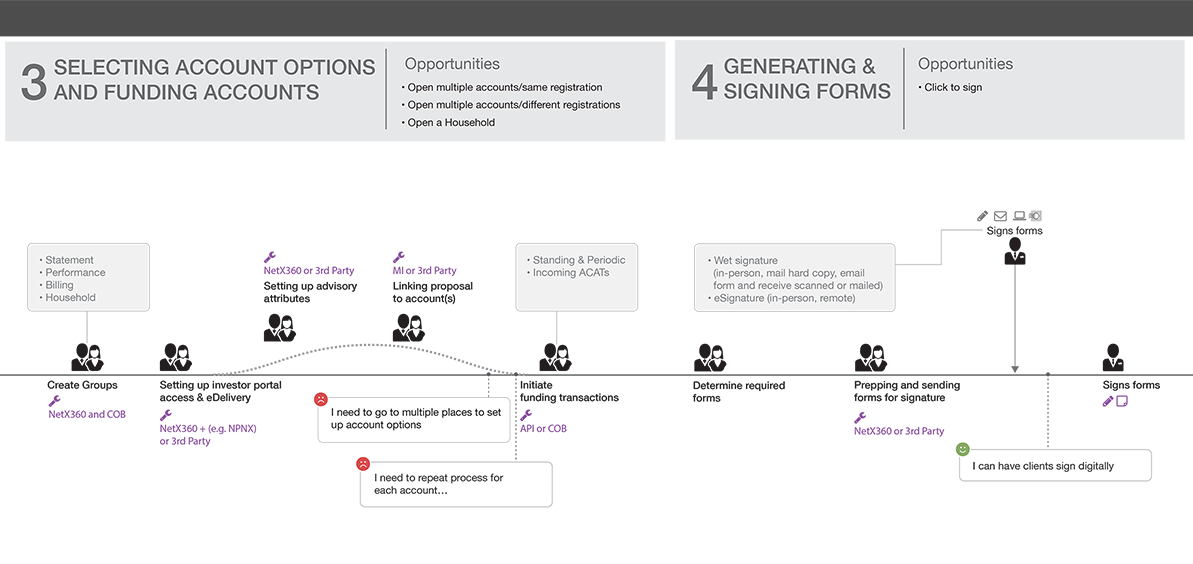
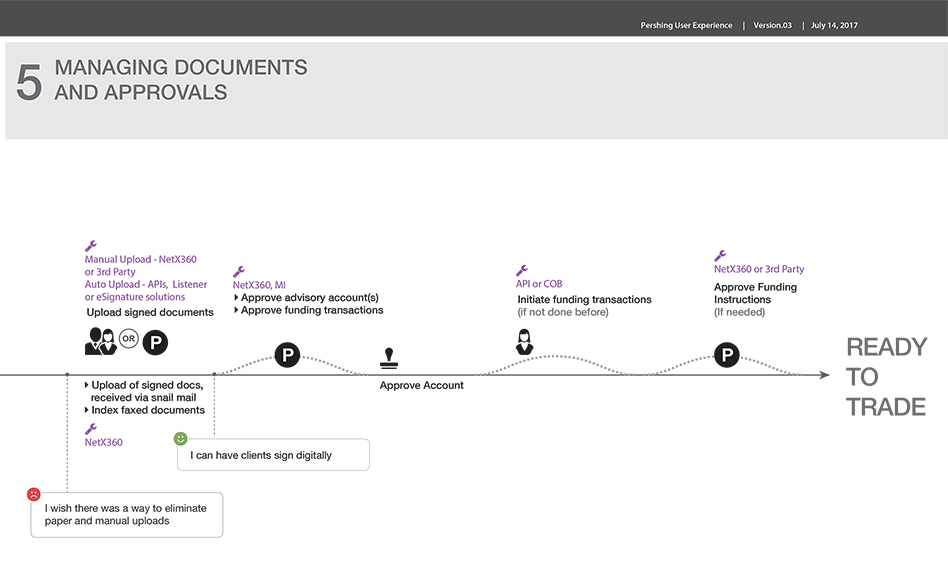
User Journey #1 for BNY Mellon Private Wealth Management, client onboarding. Cover slide with all sections. Individual sections below.
Situation:
New client on-boarding was identified as a pain point, for our users. User Journeys were results of interviews, internal and external.
Task:
We needed user journeys, so we can take our management through them, establish empathy, and secure budget for major improvements. Plus, we needed to understand our user better, their high, and low points, so we can act on it.
Action:
I designed and built the user journey.
Result:
User journey was well received by the team.
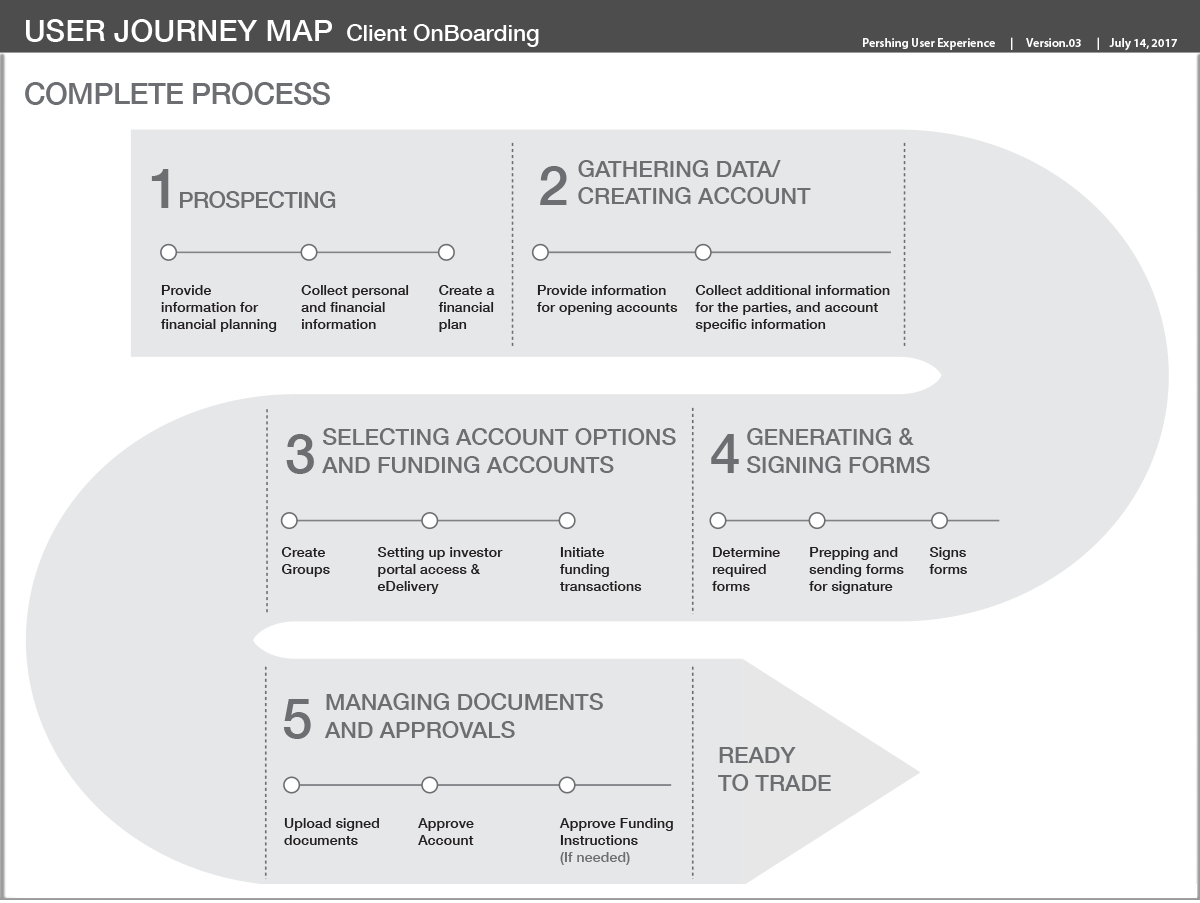
Phases #1 and #2
Phases #3 and #4
Final 5th phase
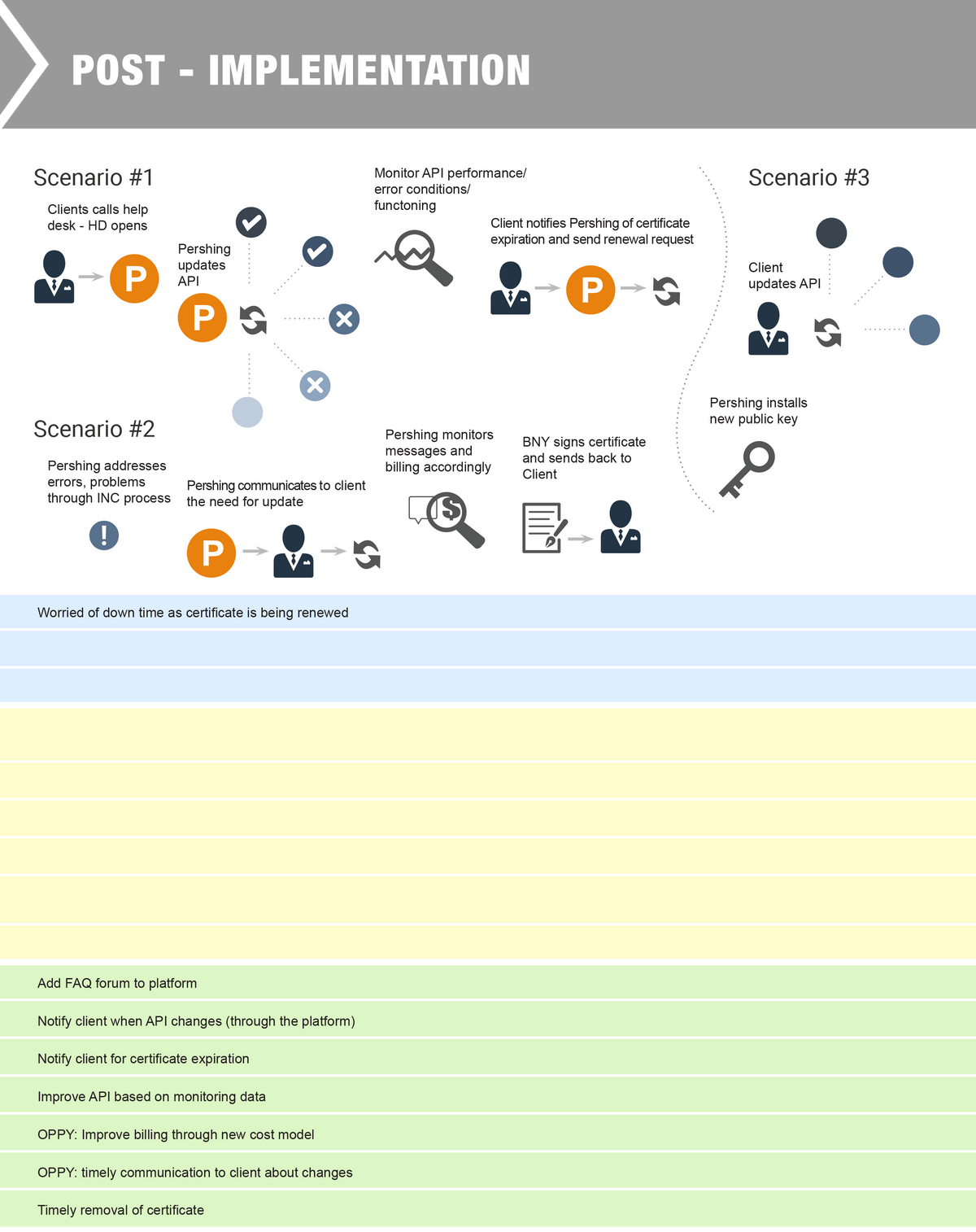
User Journey for BNY Mellon Wealth Management - API onboarding
Situation:
API on-boarding was identified as a pain point, for Pershing tech partners. User Journeys were results of interviews, internal and external.
Task:
We needed user journeys, so we can take our management through them, establish empathy, and secure budget for major improvements. Plus, we needed to understand our user better, their high, and low points, so we can act on it.
Action:
I designed and built the user journey.
Result:
User journey was well received by the team.
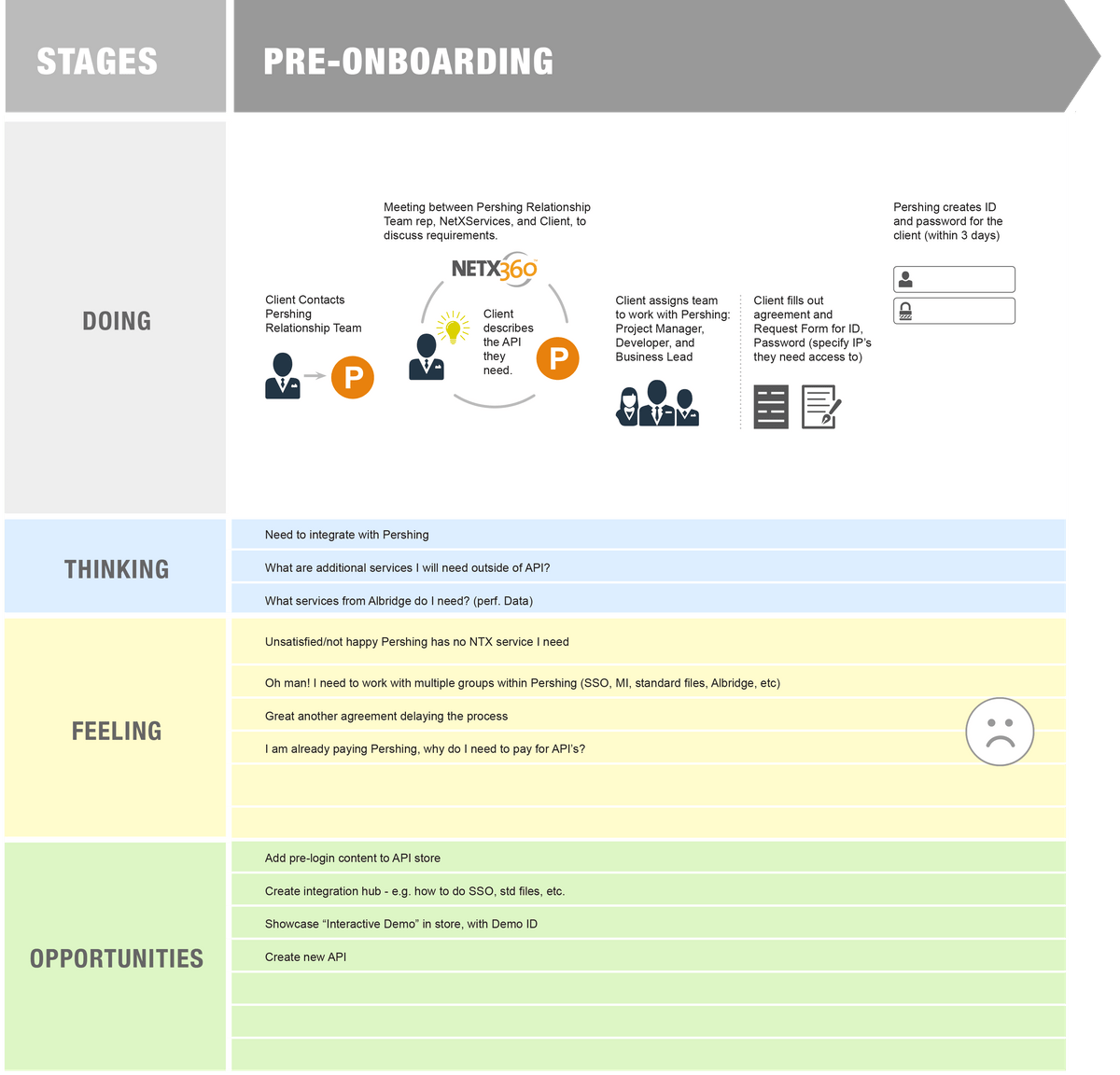
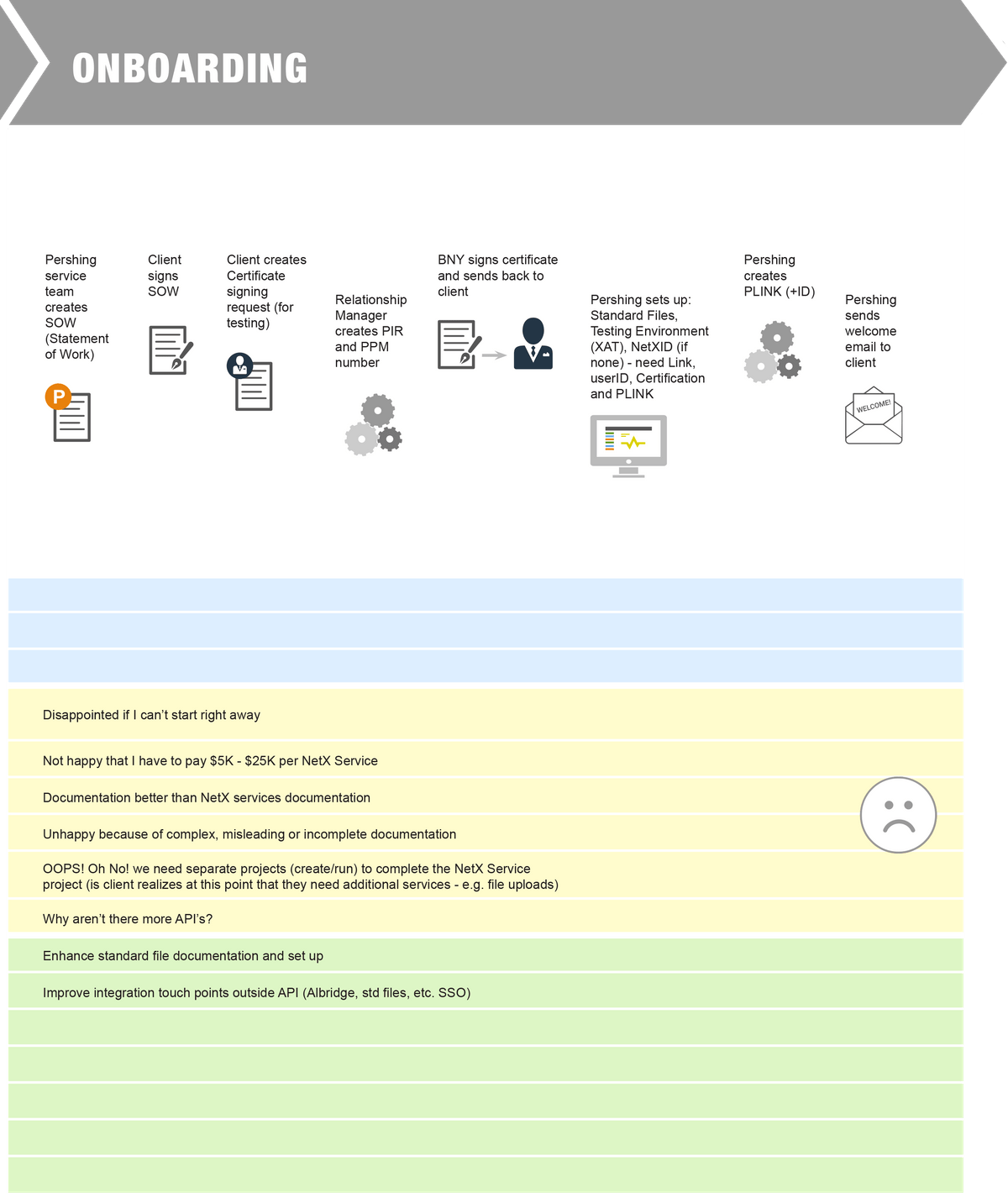
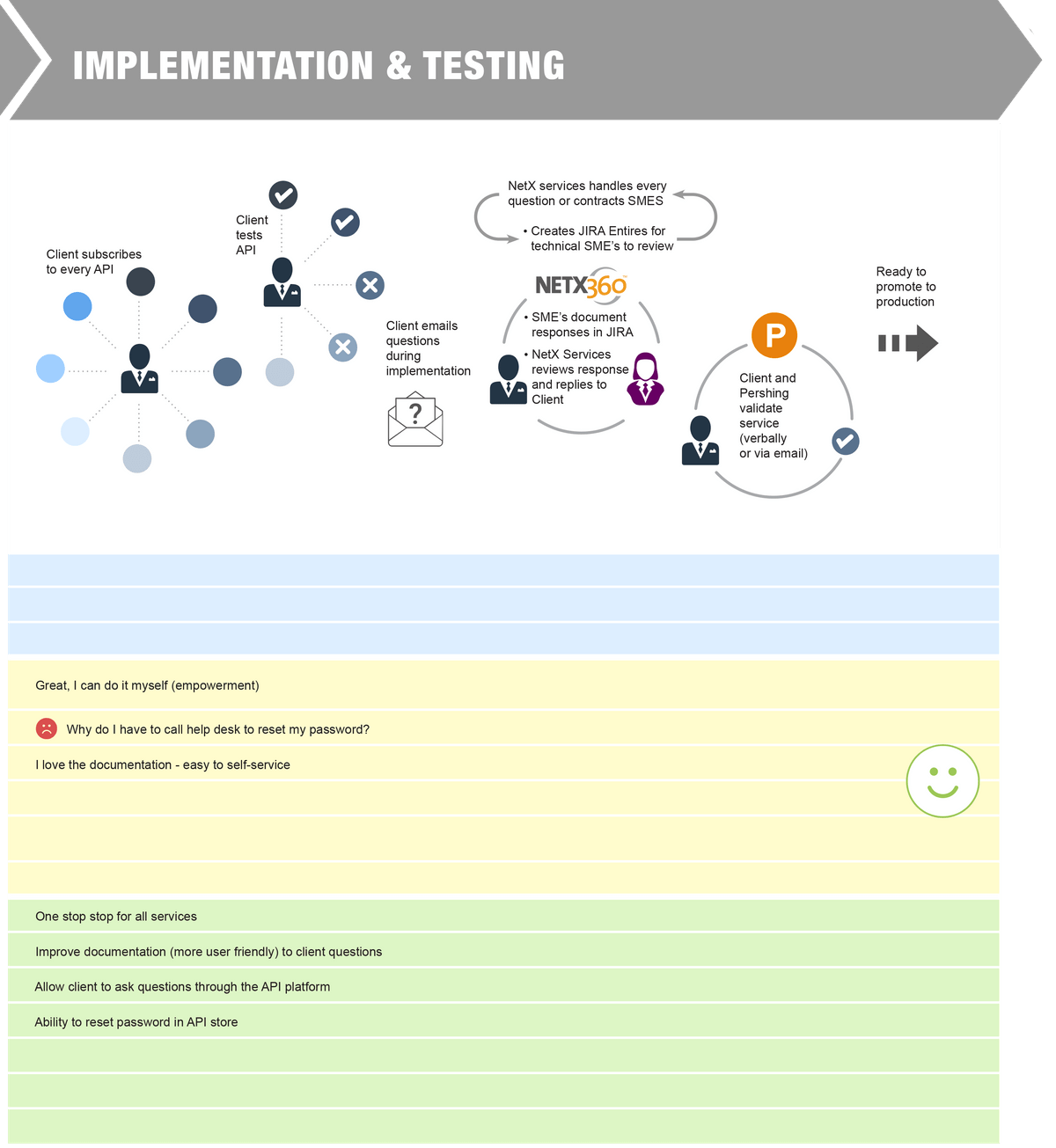
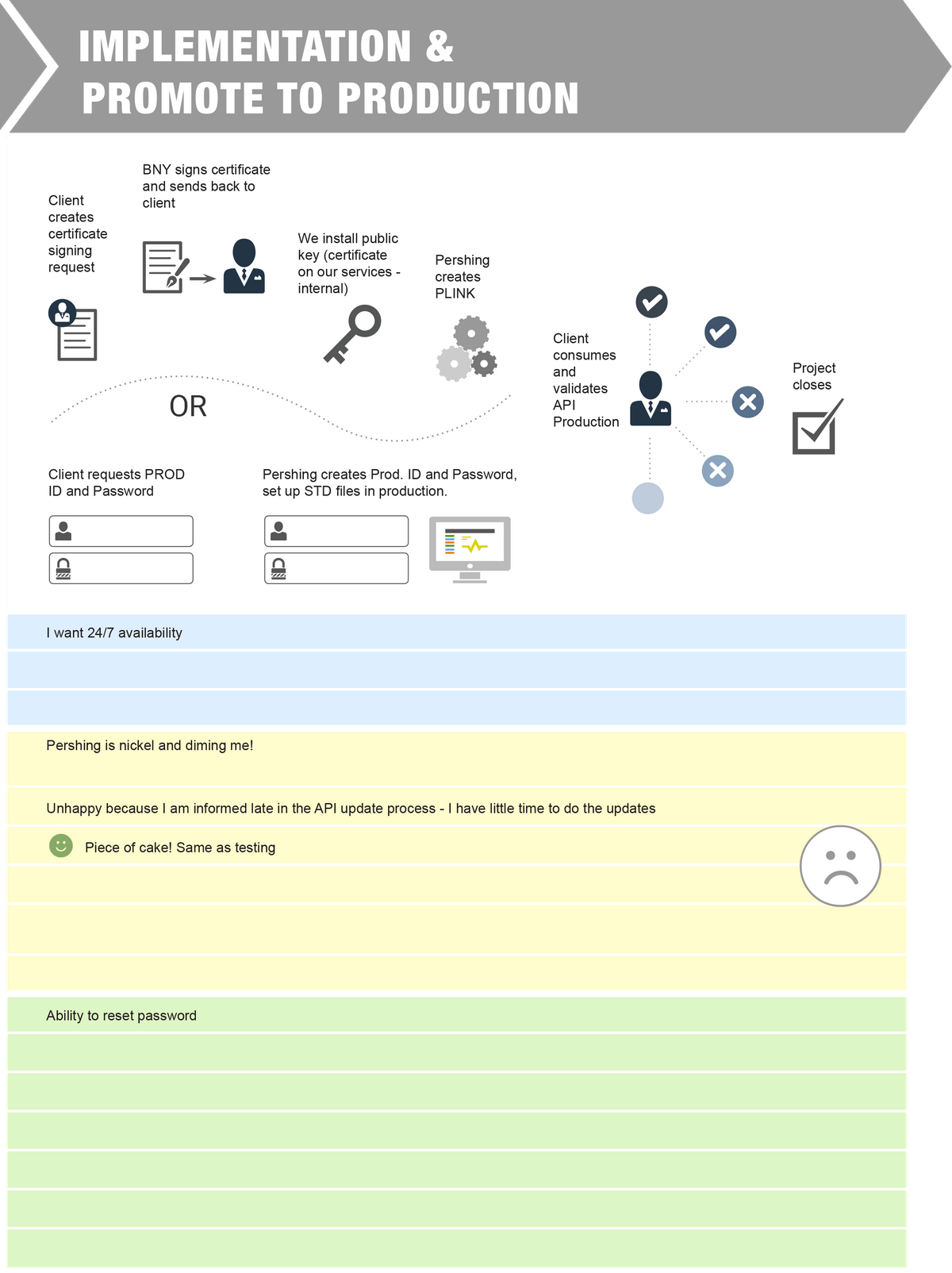
User Flow
Brief note for non-UXers: the difference between a User Flow and User Journey:
• User Flow shows steps in the process. It's usually a diagram, or a decision tree-like. User Flow takes into consideration only steps in the process. It's very technical in nature. User Flow is used to show a stakeholder how long would it take to complete a task, and/or how many steps.
• User Journey is a lot more comprehensive. It may consider time, location, mood of the user, and external factors - not just user and a system. Think of it as a user flow, on steroids. User Journey is used to identify pain points, and opportunities. It's used to enable stakeholders to put themselves in user's shoes, and experience what the user is experiencing, feel user's frustration, or excitement.
Both artifacts also help UX-ers understand the environment, product, users and business needs.
About the project: Agreements
Docs application overview
- Docs, the electronic give-up system, allows brokers, traders and customers to electronically execute the FIA uniform give-up agreements and the FIA-ISDA Cleared Derivatives Execution agreement
- The app is referred to as the "golden source" for give-up agreements in futures industry
- Designed based on FCM (Futures Commission Merchant) community input and requirements
- Docs also provides a standard electronic rate template which can be modified by firms to their specifications and attached to agreements within the system
- Docs has 10,000 users and it's 10 years old. Though the app has been updated over the years, the code is outdated, performance is slow and so incremental improvements are limited.
- 2018 focus is to provide a robust MVP, and decrease time to execute an agreement
Situation:
My company team came up with a fully restructured user flow. The goal was for the Focus Group to approve the new workflow, so we can start production.
Task:
One of our users asked in a Focus Group, "How much time it will take to initiate an agreement? How many clicks?" So, my job was to answer that question, alleviate any fears or confusion, so product can move forward as planned.
Action:
I requested to be given the Functional Lead and the SME, for a 3-hour white-boarding session. I wanted them to:
1. Help me understand the app fully2. View the app themselves, 100% from a user's point of view
During the session, as we spoke, I drew on the board. (User's) step by step. It was an incredibly helpful exercise, as it forced us to iron out kinks in the flow, that only became apparent, when you put yourself in user's shoes.
Result:
My flow succedded in the Focus Group with the stakeholders. They understood our proposal, and the flow diagram answered their questions. They were happy with what they heard and saw. And we were approved to move forward with the implementation.