
Yelena Dobric
Yelena Dobric
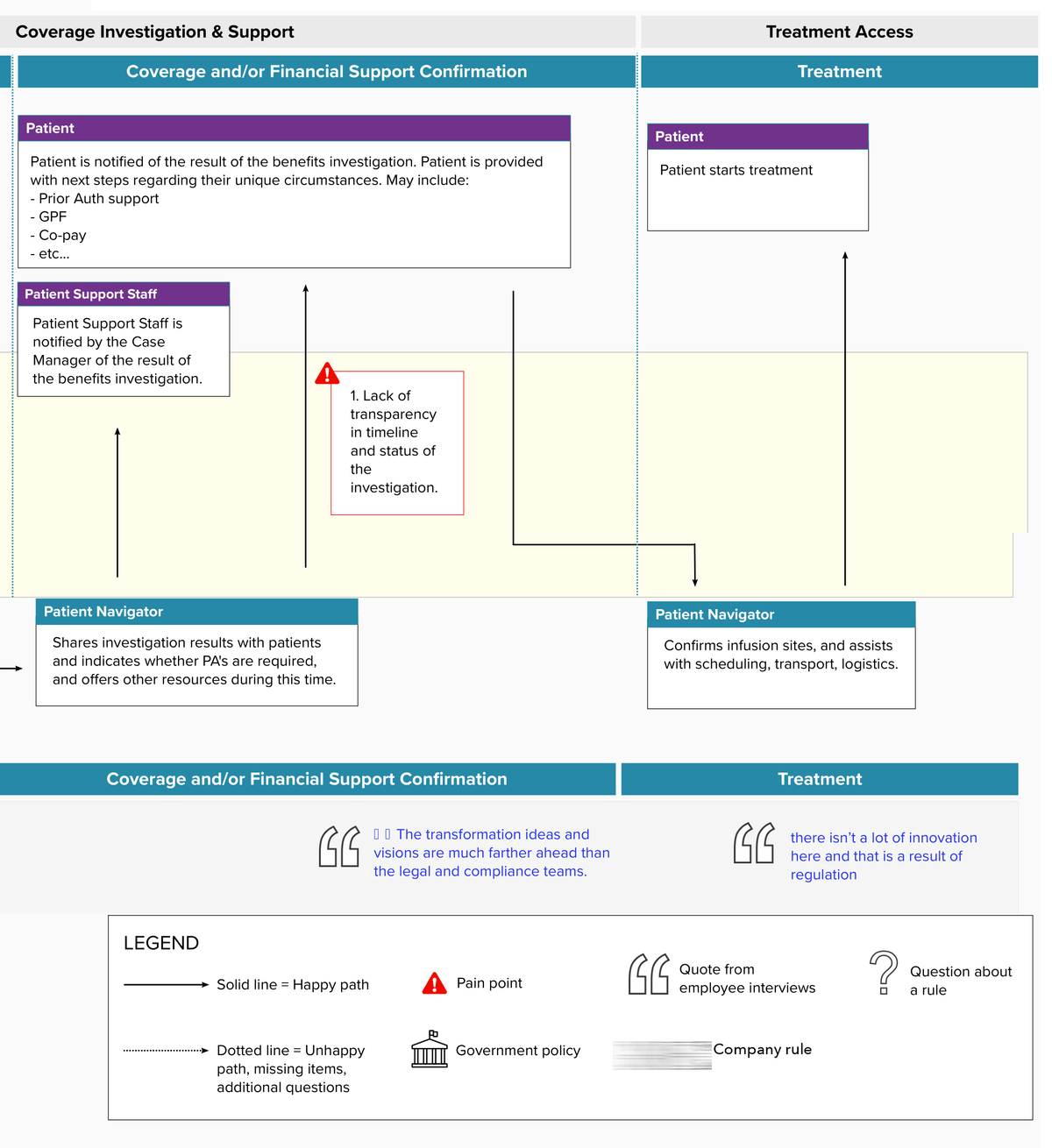
Genentech process diagram for the co-pay assistance division
Genentech co-pay assistance program that identifies patient and employee pain points in a process diagram. I built it in Mural.
Situation:
Enrollment process had 20% abandonment rate. Client wanted to know why the abandonment was happening, and what can be done to fix the situation.
Task:
Help client:
1. Confirm known pain points, and discover unknown ones
2. Identify solutions and prioritize them
3. Recommend implementation methods
This blueprint was description of current state. After we had spoken with the initial batch of employees, we outlined what we heard, into process diagram.
Team:
Product Manager, SME, Teach Lead, Creative Director, and me as a UX Lead.
This project for me, was 45% user research, 45% strategy and 10% UI.
Action:
I interviewed:
1. Intake Coordinators who receive forms and work with OCR
2. Case Managers who communicate with doctors and patients, to ensure all documents and information is complete and accurate
3. Reimbursement Specialists who communicate with insurance companies and pharmacies
4. Patient Navigators who communicate with patients to keep them informed throughout the process, answer questions, and basically hold patient's hand
5. Call Center agents and managers who service both patients and employees; they answer patient questions and guide patients through filling out forms online, and answer employee questions and/or triage employee calls
What we found, I will explain here on a very high level. More detail is above each relevant slide below. But in a nutshell, we found:
1. Heavy reliance on fax
2. Nurses don't have time to talk to patients
3. Issues with forms (confusing layout, missing dates, missing signatures, repetitive questions, discrepancies between brands with the same parent company, and patient's form and doctor's do not arrive at the same time to the processing center, thus creating delays in matching)
4. Patients left in dark in terms of progress of their application.
Result:
We used this blueprint in a 3-hour workshop with the client, to get their feedback, and exchange views, as we head towards phase #2: prescription of the future state. The workshop was a great success. We had about 30 participants, and everyone was very engaged. Feedback was flowing, and client was happy that we understood their process so well, and uncovered valuable insights. Solutions were voted on and prioritized as follow:
1. Increase Patient Support Staff usage of digital through integration with 3rd party tools (EMR, Electronic Medical Records)
2. Create Patient Relationship Hub
3. Create Patient 360 view
4. Amend internal policy to allow for verbal consent
5. Implement Digital Voice Assistant to enable verbal consent, status update for patients and triaging calls
6. Implement tracking and analytics of internal tools
7. Improve internal collaboration / break sillhoes, to discuss best practices
8. Enhance transfer of patient records from external sources
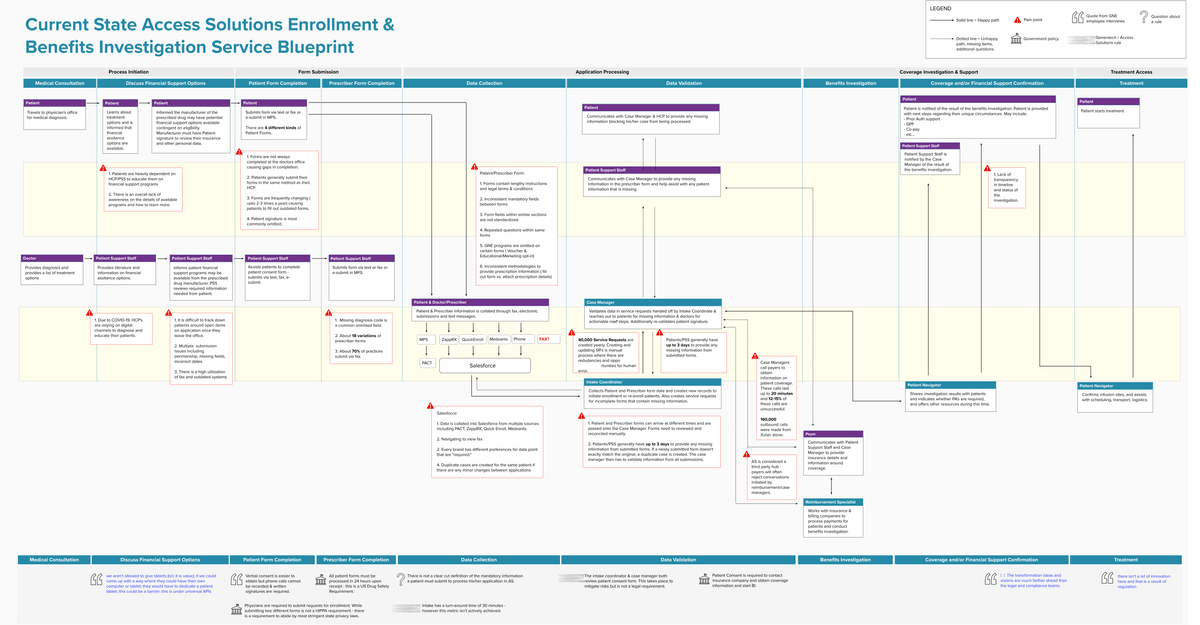
1st two phases: Process Initiation and Form Submission
• We found that Patient Support Staff is overwhelmed and does not have sufficient time to dedicate to explaining patients their options.
• We also found heavy reliance on paper forms, that often end up submitted incomplete, which causes delay in patient receiving treatment.
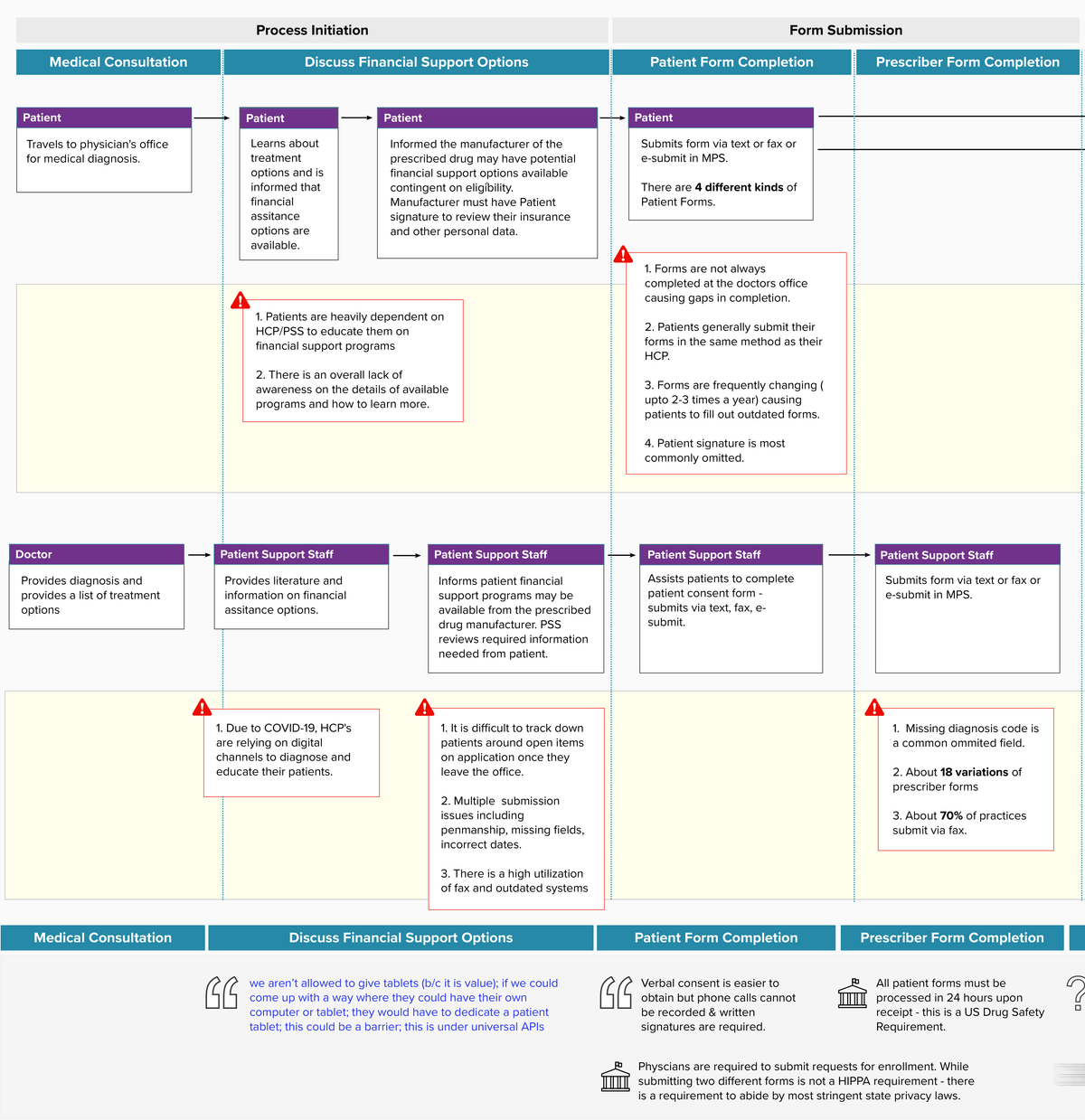
2nd three phases: Data Collection & Validation and Benefits Investigation
• We found issues with forms' content and structure, be it paper or online.
• Duplicate Patient Profiles due to just minor differences between applications.
• Discrepancies between different brands (medications) of the same parent company (our client)
• Patient & Prescriber forms, for the same patient and same medical issue, arrive at different times, to our client's Co-Pay assistance division. Reconciliation is automated. Albeit not 100% successful. So, some manual matching takes place, leaving room for error and slowing the process down.
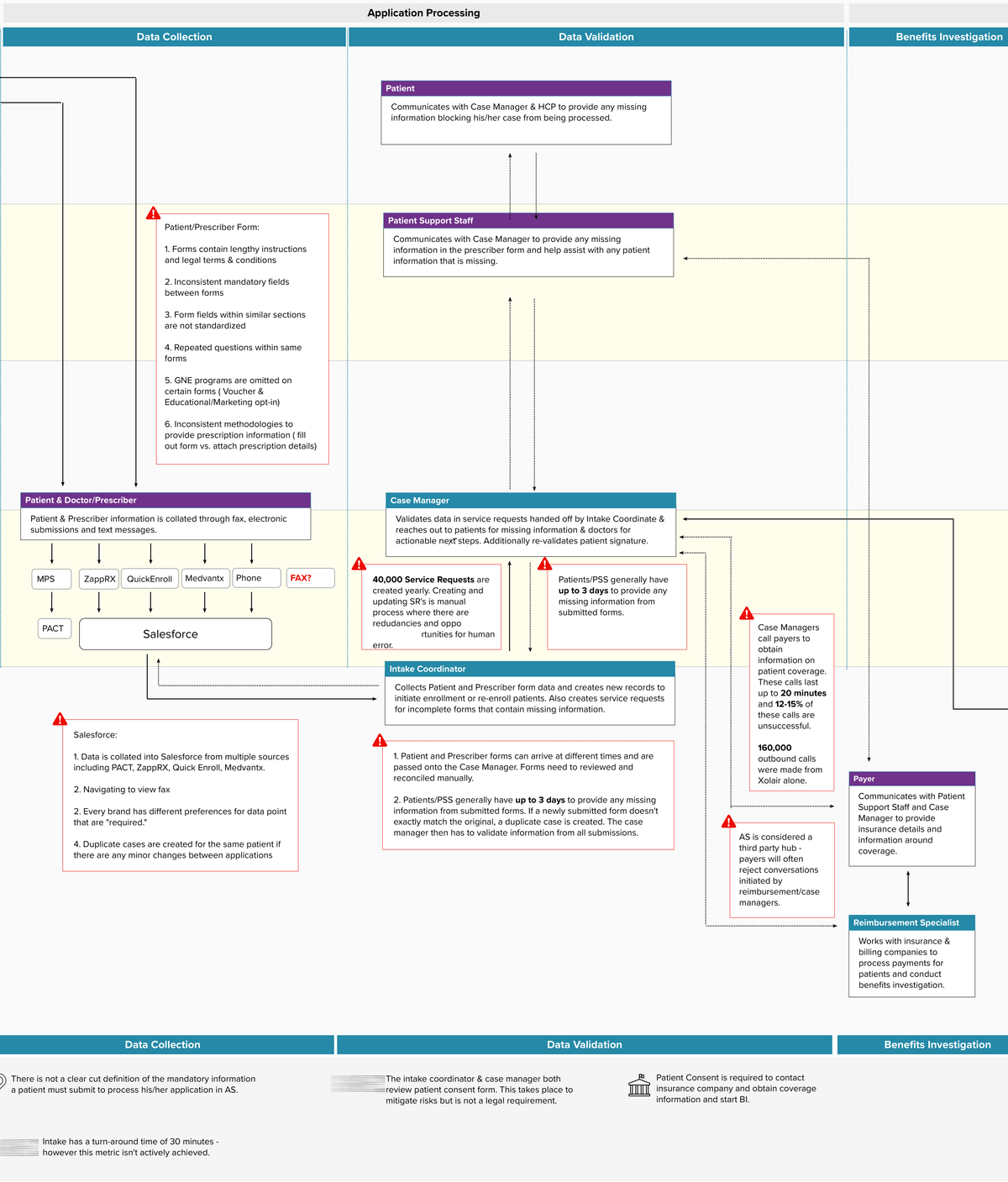
Final two phases: Coverage and/or Financial Support Confirmation and Treatment
• We found lack of transparency in timeline and status of the investigation. Patients call to check status. This process can easily be automated by a Bot.